
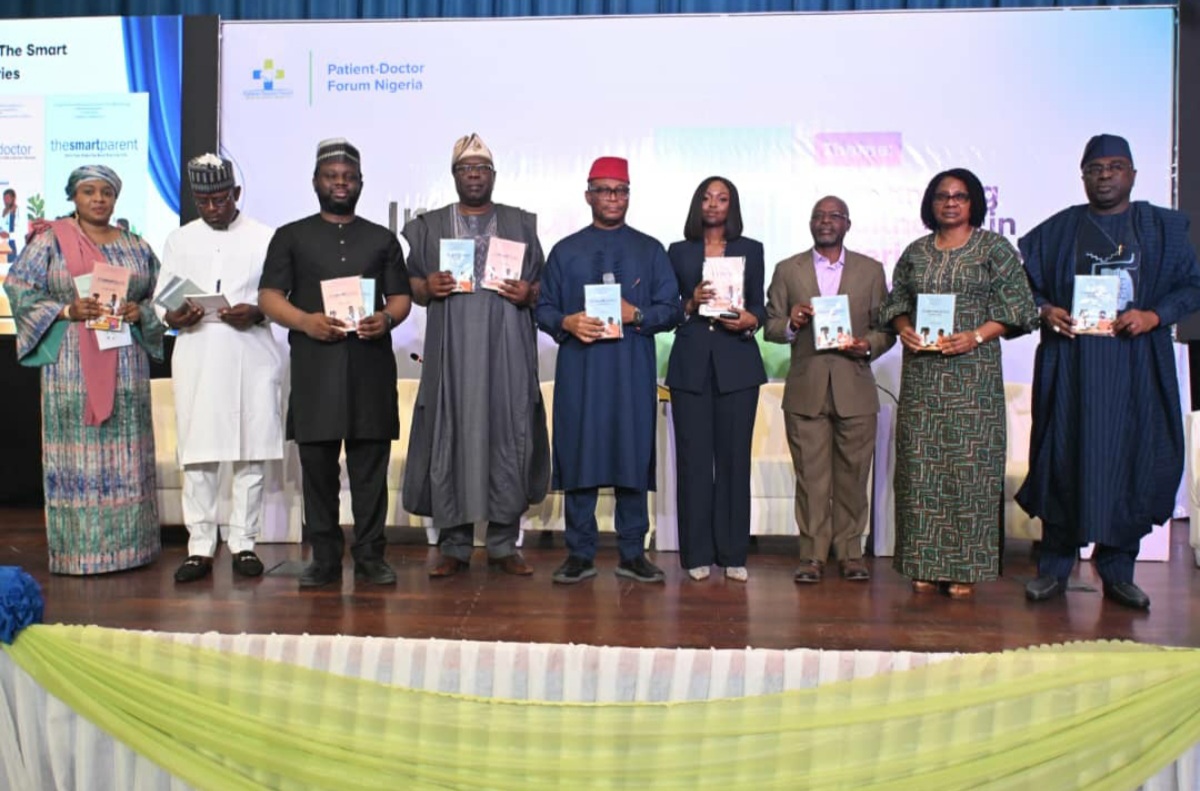
Dr Isaac Akerele, Director General, Nigerian Doctors Foundation said that the experts gathered to explore a subject at the heart of good healthcare: effective community that advances patient‑centred care.
Akerele said this in Abuja on Saturday during the launch Patient–Doctor Forum with theme ‘Humanising healthcare in Nigeria: Empowering patients, caregivers, and providers’.
He said that the launch was to bridge the communication gap in healthcare by bringing patients, caregivers, and providers together in one room.
“Today we bring together two essential partners in health , those who seek care and those who provide it, to learn from one another and to listen.
“We will also to build practical ways to improve outcomes, satisfaction, and quality of life for patients across our dear country and beyond,” he said.
According to him, for too long, the conversation about healthcare has happened in silos.
He said that clinicians spoke in one room, patients in another, and policymakers in a third. This forum exists to break those walls down.
”The purpose of our gathering is simple yet profound: to make communication the bridge between medical expertise and lived experience.
”When that bridge is strong, diagnosis is clearer, treatment plans are followed, and trust is restored.
“We know that the best clinical knowledge means little if it cannot be understood, accepted, and acted upon by the person receiving care.
“That is why patient‑centred communication is not a luxury; it is a clinical necessity,” he said.
According to him, the forum was not about blame, but about shared responsibility.
He said that good healthcare required both competent providers and informed, engaged patients, neither succeeds without the other.
“Over the next few hours, we will examine practical tools for improving communication at the bedside, in clinics, and across digital platforms.
“We will also discuss how health systems can support and reward these practices.
“We will talk about language not just medical jargon, but the language of respect, empathy, and cultural sensitivity that makes patients feel safe enough to speak openly,” he said.
Akerele said that the forum would talk about listening, active, uninterrupted listening that allows clinicians to hear what was said and what was left unsaid.
He said that they would talk about partnership , moving from a model where the doctor decides and the patient obeys, to one where decisions are made together based on evidence, values, and circumstances.
”Nigeria’s health challenges are complex, but our greatest resource remains our people.
”When patients and providers trust each other, adherence improves, errors reduce, and outcomes improve even before new drugs or equipment arrive,” he said.
According to him, the goal is to produce actionable recommendations that can be taken back to hospitals, clinics, training institutions, and homes across the country.
” May our dialogue today humanise healthcare, empower everyone in this room, and set a new standard for how we care for one another in Nigeria and beyond,” he said.
Dr Akin Moses, Coordinator of Training, Family Medicine and Head, Emergency Medicine, NationalHospital Abuja who spoke on the theme says that healing begins when the patient feels seen, heard, and valued.
Moses said that beyond science, systems, resources, and professional pressures, the strongest medicine was often the human connection between doctor and patient.
”Without that connection, you treat the illness but miss the person.
“Humane care is not optional. A health system can have skilled doctors and advanced technology and still fail patients if it lacks compassion, respect, and accountability.
“How a system treats people is the real measure of its strength. Patients may forget what you said, but they never forget how you made them feel,” he said.
According to him, the patient-doctor encounter is where science meets humanity.
Moses said that the patient was not a case file but a person carrying fear, uncertainty, hope, and a need to be understood.
” Every patient walks in with symptoms and a silent hope that someone will listen, understand, and care. That someone is you.
” Patients with complex conditions have one request: remember we are human.
” Believe us, take us seriously, listen, ask before touching, and recognise that illness affects every part of our lives.
“Humane care translates health as a biomedical event into healing as a lived experience,” he said.
Moses said that focusing only on disease to the exclusion of the person strips humanity from the encounter.
According to him, when physicians ignore psychosocial, emotional, and environmental factors, they detach from the patient’s real state of health.
“A biopsychosocial, patient-centered approach restores that connection and produces better outcomes.
“Evidence shows humane care helps patients recover physically, emotionally, and psychologically.
“It increases participation in care, improves communication, enhances diagnosis and adherence, reduces burnout, and lowers conflict and litigation.
”Respectful communication and dignity directly improve clinical outcomes in diabetes, pain, and cancer care,” he said.
According to him, what patients actually value are dignity, respect, privacy, confidentiality, being listened to, clear explanations, opportunity to ask questions, guidance on next steps, reassurance, and empathy.
He said that are not extras, they are treatment that gives value and happiness to patients, alongside drugs and procedures.
Moses said that the system-level barriers in Nigeria made humane care difficult.”Poor doctor-patient ratios, low health budgets, long waiting times, disrespectful treatment, and weak infrastructure erode trust.
“When patients face delays and poor communication, services are avoided and outcomes like maternal mortality worsen,” he said.
According to him , one cannot give what he or she do not have. He said that personal problems, prejudice, judgmental attitudes, burnout, excess workload, and poor welfare all block humane care.
” Protecting clinician well-being and addressing moral injury are prerequisites for compassion.
“Medicine is not only a science; it is a human relationship and a moral practice. We may not change every system overnight, but we can change how we care today.
” Commit to practicing with competence, empathy, respect, and presence.
“If each person removes one barrier to human connection in their sphere, the system will begin to change,” he said. (NAN)