
By Justina Auta, News Agency of Nigeria, Abuja.
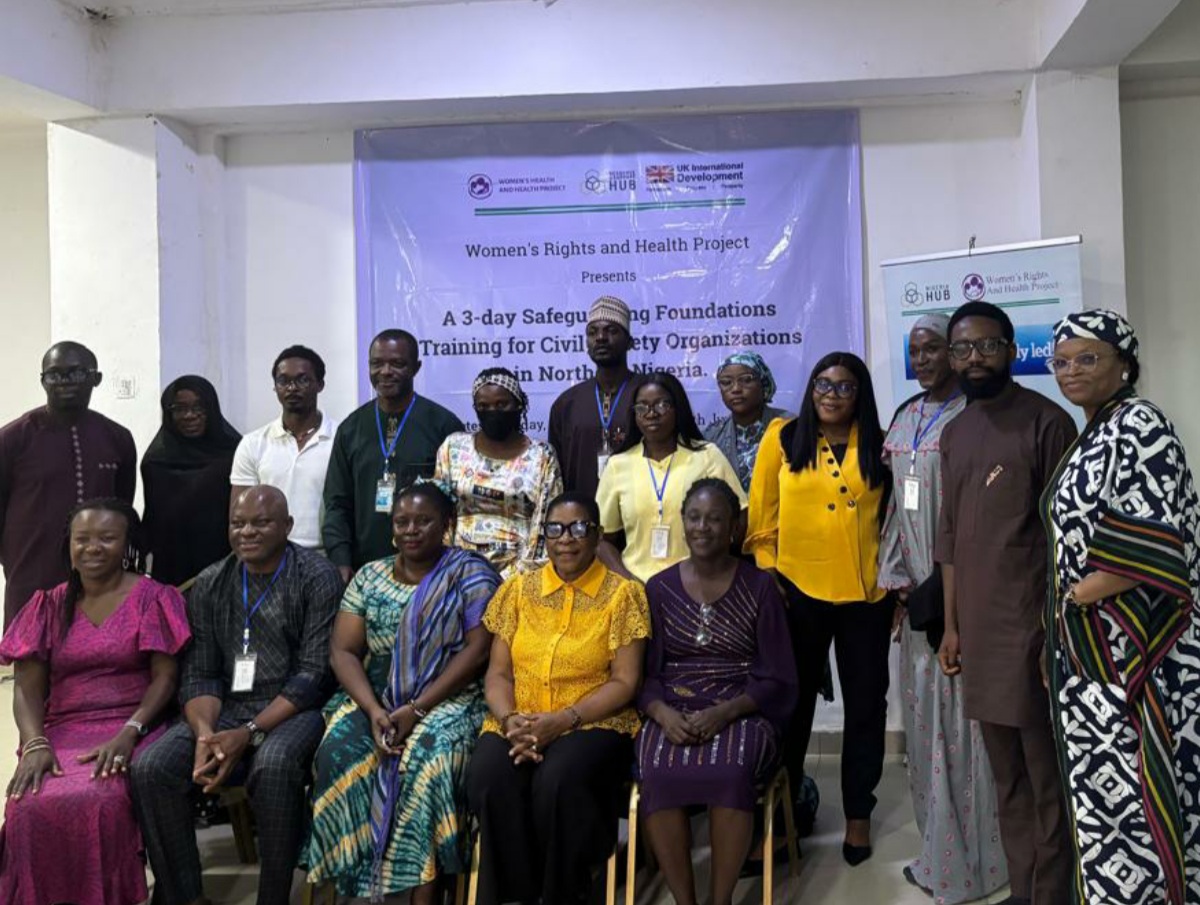
The Foreign, Commonwealth and Development Office (FCDO) and the Women’s Rights and Health Project (WRAHP) have trained Civil Society Organisations (CSOs) in Northern Nigeria on safeguarding against sexual exploitation, abuse and sexual harassment (SEAH).
The intervention formed part of a three-day training programme for selected CSOs across Northern Nigeria, organised by WRAHP, the local affiliate partner of the Safeguarding Resource and Support Hub (RSH), with support from the FCDO in Abuja.
Mrs Bose Ironsi, Executive Director of WRAHP, said the training was aimed at improving safeguarding systems, policies, knowledge and practices among CSOs operating in humanitarian and development settings across the northern region.
She said safeguarding was often misunderstood and confused with Sexual and Gender-Based Violence (SGBV), noting that it usually began with minor incidents such as harassment before escalating into abuse.
“Sometimes a person may first experience harassment, unwanted physical contact, bullying or coercion before it develops into more serious violations,” she said.
Ironsi said that Nigeria’s patriarchal structure and existing power imbalances made safeguarding even more critical, emphasising that trust between communities and service providers was essential for effective intervention.
According to her, the training will enable CSOs to critically assess their organisations, identify gaps and develop stronger safeguarding policies that would be impactful within workplaces and communities.
“When communities feel safe with the organisations that serve them, trust is built and meaningful progress becomes possible.
“Safeguarding is not only about what organisations do for communities; it is also about how we operate internally,” she added.
She said participants would also review local, national and international safeguarding frameworks to strengthen policy development and improve organisational practice.
Ironsi added that the strong response from organisations across Northern Nigeria reflected growing recognition that safeguarding was not only a compliance requirement but also a key element of organisational accountability and culture.
She said the training would help CSOs move from policy to practice and build safer environments for the communities they serve.
Also speaking, the FCDO Nigeria Social Development Adviser, Ms Dooshima Orjime, reaffirmed the commitment to strengthening safeguarding systems through locally led partnerships aimed at improving community protection.
She said meaningful change began at the grassroots, noting that CSOs often served as first responders because they work directly with communities and vulnerable populations.
“Training CSOs is a deliberate strategy, and we believe that when they have the right capacity, they are better positioned to promote community-led safety initiatives that uphold dignity and rights,” she said.
WRAHP Safeguarding Technical Adviser, Mrs Janet Abazie, emphasised the need for organisations to move beyond policy development to effective implementation of safeguarding systems.
She said reporting mechanisms must be safe, accessible and inclusive, while also addressing cultural and language barriers to encourage community participation.
A participant, Dr Emmanuel Ande, Executive Director of The Ivorgba Centre, said the training had equipped organisations with tools to build safer structures and improve accountability.
“Safeguarding is not only about preventing sexual exploitation, abuse and harassment, but also addressing bullying, intimidation and misconduct within organisations and communities,” he said.
Similarly, Dr Precious Williams of WOTCLEF said the training reinforced the importance of proactive safeguarding systems to prevent abuse and organisational risks.
“It is better to be proactive and take full responsibility for safeguarding than to face the consequences of not having policies in place,” she said.
Mr Abdulwahab Yusuf, CEO of Yufique Global, said safeguarding policies must be context-specific and reflect cultural and religious realities to be effective.
He added that safeguarding should be treated as a living document that must be continuously adapted to local realities rather than copied templates.
The three-day training is part of the RSH Nigeria Safeguarding Capacity Strengthening Programme supported by FCDO to improve protection systems and prevent SEAH across civil society organisations in Nigeria.
The programme brought together representatives from 12 selected CSOs to deepen their understanding of safeguarding, Protection from Sexual Exploitation, Abuse and Harassment (PSEAH), survivor-centred approaches, organisational accountability and safer programming practices.
NEWS AGENCY OF NIGERIA