
By Justina Auta, News Agency of Nigeria, Abuja.
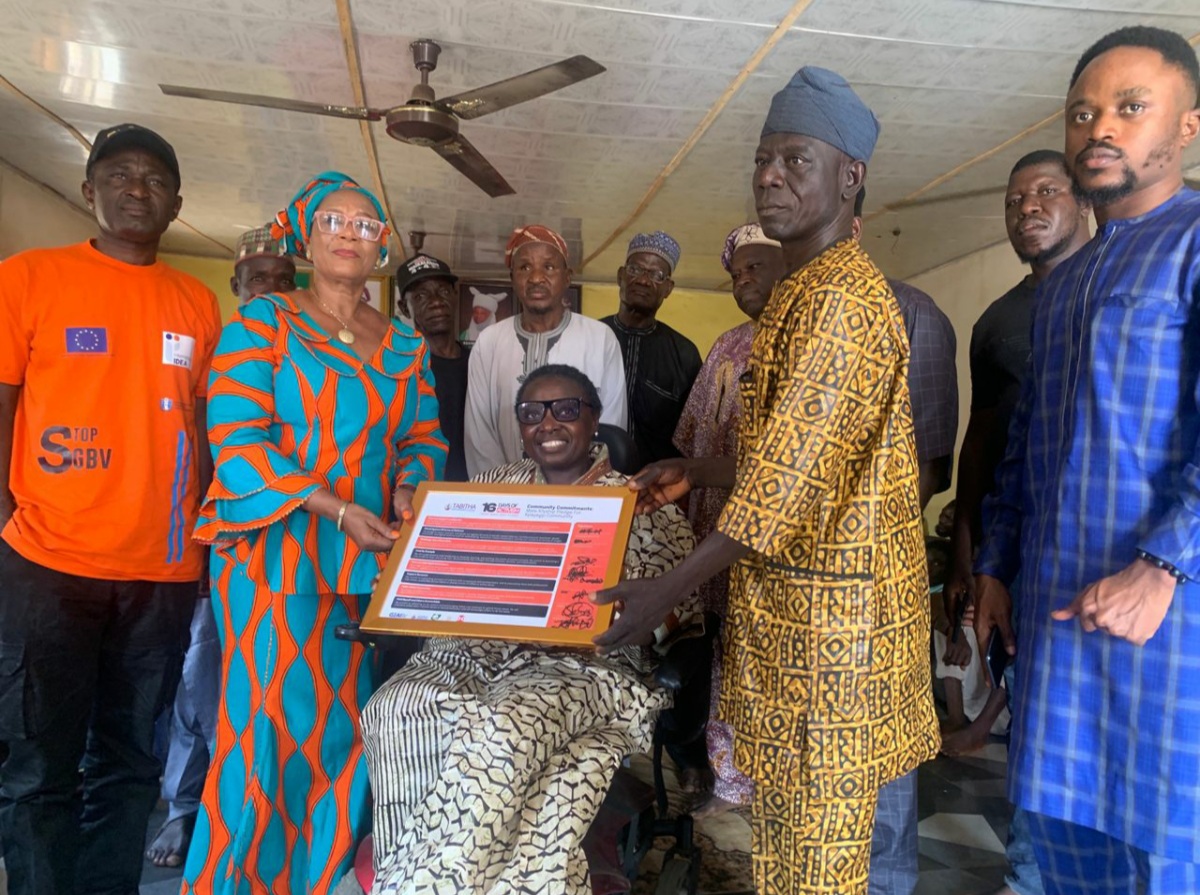
The Tabitha Empowerment Centre (TEC) has rallied community members and traditional leaders in Kpegyeyi, Abuja, to strengthen male allyship in preventing digital violence and protecting survivors of Gender-Based Violence (GBV).
The centre made the call at a press conference and community sensitisation on Sunday in Abuja, as part of the 2025 16 Days of Activism Against GBV.
Mrs Christina Uzo-Okamgba, TEC Founder and Executive Director, highlighted the need for stronger male allyship and renewed community action to prevent technology-facilitated violence and protect GBV survivors.
Uzo-Okamgba said that the prevalence of digital violence, such as cyberbullying, sextortion, harmful content circulation, and online blackmail, had contributed to broken homes, destroyed reputations and silenced ambitions.
She urged community members to take collective responsibility in curbing such acts, declaring that Kpegyeyi would not permit any form of digital violence against women and girls under its watch.
Mr Gabriel Onyali, AMAC Protection Officer, National Agency for the Prohibition of Trafficking in Persons (NAPTIP), said that traditional forms of abuse, such as domestic violence and rape, were now increasingly committed through digital platforms.
Onyali listed cyberstalking, online harassment and non-consensual sharing of intimate images as criminal offences under the Cybercrime Act 2015, reviewed in 2024, carrying penalties of up to five years imprisonment and fines.
”Community sensitisation and responsible digital behaviour among young people, especially boys, are among the strategies to end GBV.
”NAPTIP’s mandate is to prevent, investigate, and prosecute sexual and gender-based crimes, and to provide protection and rehabilitation for victims,” he said.
Mrs Deborah Life-Alegbemi, representing Christian Women for Excellence and Empowerment in Nigerian Society (CWEENS) FCT chapter, highlighted prevalence of digital threats, coercion, and blackmail targeted at women and girls.
She urged men to become active peace promoters and allies in homes and communities.
Irene Igomu, representing Girls Education Access Initiative (GEAI), proposed reforms in school curricula to eliminate gender stereotypes, and teacher training for inclusive learning environments.
Igonu said that it would also educate social media influencers on the use of social media for digital safety education and incentive-based reporting systems to improve accountability.
Also, Mrs Lois Auta, Founder, Network of Women with Disabilities, highlighted the heightened vulnerabilities of women with disabilities, who often face gender discrimination, disability-based stigma, and social marginalisation.
Auta called for strict sanctions against perpetrators, survivor-friendly support mechanisms, and the establishment of a trust fund for survivors.
Ms Gladys Emmanuel, TEC’s Advocacy Officer and In-house Counsel, underscored its rights-based and survivor-centred approach.
Emmanuel said that survivors who report at the centre were allowed to guide decisions on referrals, police engagement, and other interventions.
She said that TEC supported survivors through psychosocial services, legal counsel, and its Girls Vanguard Project,
which equips young girls with knowledge on human rights, digital literacy, and sexual and reproductive health rights.
She presented TEC’s community-focused strategy, including the adoption of community pledges, formation of anti-GBV committees, development of community champions, and targeted sensitisation of men and boys.
The News Agency of Nigeria (NAN) reports that participants, during the interactive session, examined how male allyship could be strengthened to prevent online abuse.
They emphasised on education, awareness creation, policy reforms, strict legal enforcement, and community-driven accountability.
They also advocated for institutional efforts to build supportive environments for survivors, fair and timely case handling, protection orders for vulnerable survivors, and procedural transparency to reinforce trust.
Joseph Afbawaje, ESU of Kpegyeyi, while commending the organisations, assured them of his commitment to promoting respect, equality, and a culture that rejects all forms of violence.
Other activities included signing of the Male Allyship Pledge, committing to challenge harmful norms, support survivors, combat online abuse, and promote safe digital practices within their homes and communities.
NEWS AGENCY OF NIGERIA