
By Felicia Imohimi, News Agency of Nigeria, Abuja.
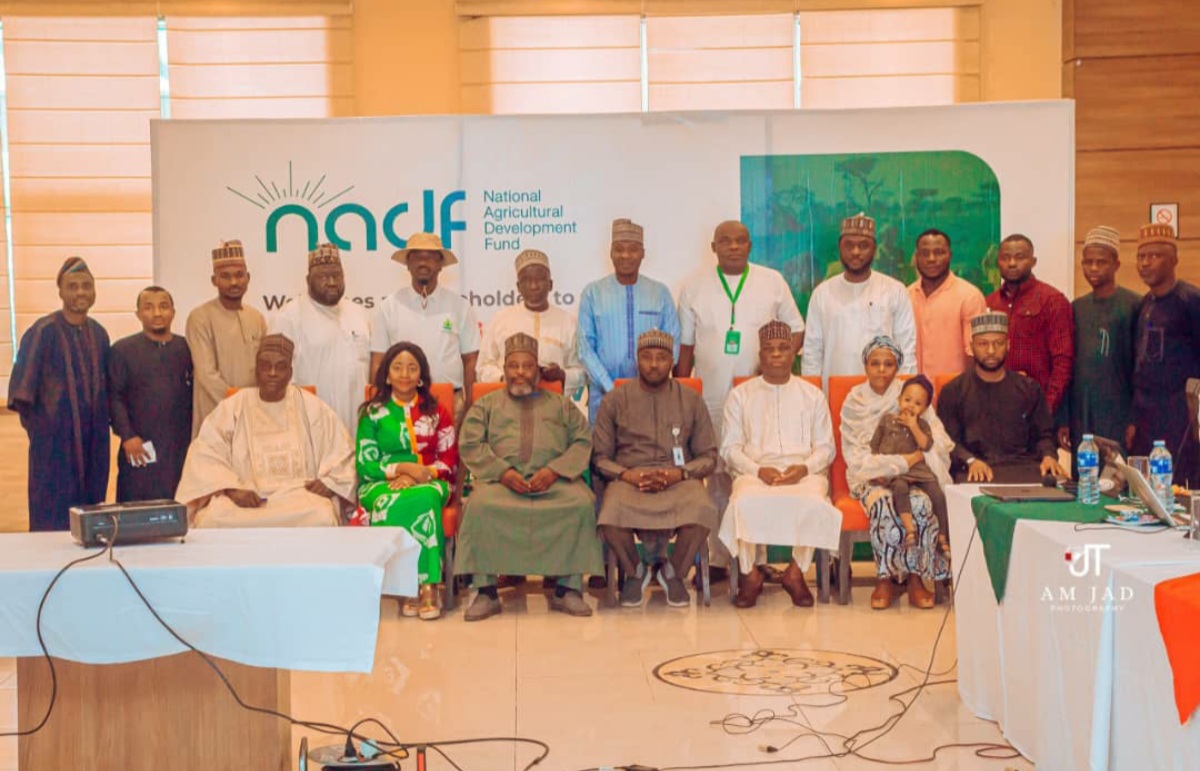
The National Agricultural Development Fund (NADF) has engaged agricultural processors, and other stakeholders to review the first phase of its Farm Input Supply Programme and fine-tune strategies for improved delivery second phase
The engagement meeting tagged “NADF–Farm Input Supply Programme Roundtable” was to assess challenges encountered during the pilot phase and propose solutions ahead of 2026 farming season.
The Executive Secretary of NADF, Mohammed Ibrahim said the programme was designed to address timely access to quality farm inputs being one of the major constraints bedeviling the nation’s agriculture.
Ibrahim further identified the programme as a strategic intervention to improve access to essential inputs, enhance yields and agricultural productivity, while strengthening rural livelihoods through out-grower systems.
Ibrahim represented by Mr Nasir Ingawa, General Manager, Partnerships and Investor Relations said NADF was established to mobilise and deploy sustainable financing to support agricultural productivity, resilience and inclusive growth, with a particular focus on smallholder farmers.
” While the objectives of the pilot programme were clear and well-intentioned, its implementation had faced some challenges, including delays that affected planting cycles and expected yields.
“We are fully aware that this pilot intervention has not been without challenges. These challenges are real and underscore the complexity of implementing agricultural interventions of this nature,” he said.
Ibrahim said the roundtable which featured farmer representatives, processors, policy experts and the media was convened to enable NADF to learn from the first phase of the programme and improve its design, coordination and delivery mechanisms.
“This engagement will help us strengthen quality assurance processes, optimise logistics and timelines, and integrate stronger climate-risk considerations into programme planning and implementation.
“Some of the challenges identified were related to input supply logistics and weather-related factors linked to climate variability.
“The first step in addressing these challenges is to bring all stakeholders together, listen to them first-hand and devise inclusive strategies that reflect realities on the ground,” he said.
Ingawa responding to concerns raised about government policies affecting the importation of farm inputs said that public policies were dynamic and often designed to respond to prevailing circumstances.
He assured “as we move into the next wet season, I am confident that government will review existing policies and adjust them in line with current realities,”.
He assured stakeholders that NADF inputs would play a key role in shaping a more efficient, transparent and climate-responsive in second phase of the programme, as part of broader efforts to boost agricultural productivity and national food security.
Prof. Mukhtar Abdullahi, of the participants, a processor and agricultural consultant, described the programme’s objectives as apt and relevant adding that they were capable of addressing many of the challenges faced by Nigerian farmers.
He however, said that government policies, particularly on importation, had negatively affected the programme’s implementation.
“At inception, we were meant to start the programme very early, but due to logistics issues and changes in importation policies, we could not get the required inputs at the right time,” Abdullahi said.
“I commended the introduction of subsidies under the programme, that it marked a significant shift from previous arrangements where farmers bore the full cost of inputs.
“Farmers were given quality inputs at a 50 per cent subsidy. This is commendable because it enables them to produce more competitively,” he said.
Abdullahi decried that fall in commodity prices posed a risk to farmers’ ability to repay loans and sustain their livelihoods.
He says “If farmers are expected to pay certain amounts for inputs, we must also consider how much they will sell their produce, who will buy at competitive prices, and whether the farmer can repay loans and still cater for his family.
“I urge government to adopt a more inclusive approach to policy formulation by consulting stakeholders before implementing policies that affect the agricultural value chain.
“The principle of stakeholder involvement is very important. When farmers, processors and other stakeholders are involved, it provides a clear road map to success,” .
Abubakar Dansadau, another participants said the roundtable was timely, given that the programme was in its first year of implementation.
“This is a government programme and we expect it to be sustainable. It is important for stakeholders to come together to discuss what went well, the challenges encountered and how to improve the programme in subsequent years,” he said.
The News Agency of Nigeria (NAN) reports that NADF Farm Input Supply Programme is running concurrently in Lagos and Kano States interacting with processors from the southern and northern part of Nigeria respectively.
NEWS AGENCY OF NIGERIA