
By Faith Abdulkadiri/Perpetua Onuegbu, NAN Abuja
Stakeholders have urged youths to shun corruption, promote accountability and be involved in democratic processes to ensure good governance in the country.
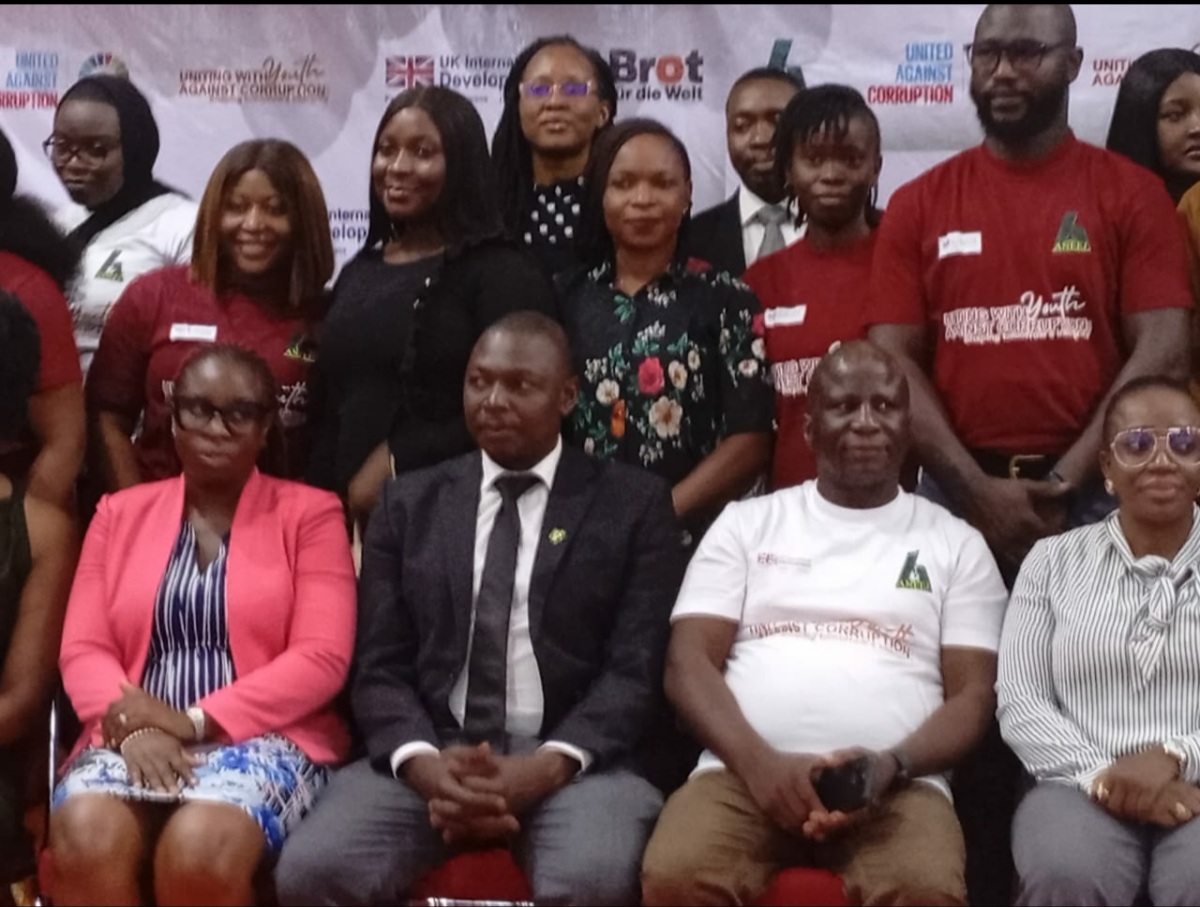
They stated this at the 2025 International Anti-corruption Day Public Dialogue, with the theme: “Uniting with Youth Against Corruption Shaping Tomorrow’s Integrity”, on Tuesday in Abuja.
The News Agency of Nigeria (NAN) reports that the dialogue was organised by Africa Network for Environment and Economic Justice (ANEEJ), through the Nigerian Illicit Finance Resilience Project.
NAN also reports that the programme was supported by the Foreign Commonwealth and Development Office (FCDO).
Executive Director of ANEEJ, Rev. David Ugolor, said the day brought to light the devastating impact of corruption on development and national prosperity.
According to him, this year’s celebration bears a unique significance for Nigeria, coming at a time when the country is striving to consolidate the gains from major reforms in asset recovery, anti-money laundering and citizen accountability.
“This year’s theme: ‘Uniting with Youth Against Corruption: Shaping Tomorrow’s Integrity’, speaks directly to the heart of our mission.
“Nigeria’s youths represent creativity, energy, innovation and the collective moral conscience of our society.
“When empowered with the right tools, knowledge and platforms, young people can challenge corruption at all levels, inspire social movements, demand accountability, and reshape governance systems for the better.
“Indeed, the future integrity of our country will be determined by the courage and values of the young people sitting in this room,” he said.
Ugolor said that the objectives of the dialogue reflected a shared ambition.
“First, we aim to enhance youth understanding of the drivers and impacts of corruption and illicit financial flows because meaningful action begins with knowledge.
“Young people must be part of the national conversation, not spectators on the sidelines. We seek to strengthen partnerships that will sustain youth-led anti-corruption efforts, long after this event is over,” he said.
In a keynote, John Onyeukwu, Founder, Institute for Social Impact Practice and Leadership, urged Nigerian youths to take ownership of the country’s future, warning that corruption was a major threat to their wellbeing.
Onyeukwu noted that the country was facing a deep crisis of trust, worsened by illicit financial flows, weak institutions and poor governance.
He said that young people, who make up more than 70 per cent of the population, were the most affected by these failures.
Citing national data, he stated that Nigeria has between 80 and 124 million young people, yet voter turnout among this demography remains extremely low.
“In 2019, only 28.6 million Nigerians voted. In 2023, despite all the social media buzz, only 24.9 million people turned out. If even half of our young people voted, they would determine the destiny of this country,” he said.
Onyeukwu warned that illicit financial flows—estimated at 15–18 billion dollars annually—were draining the resources needed for education, health care and infrastructure.
“This is how corruption kills, not in dramatic headlines, but in silent, preventable tragedies—maternal deaths, lack of vaccines, collapsed hospitals, abandoned schools.” he said.
Onyeukwu noted that Nigeria has strong anti-corruption laws, but that gaps in leadership, enforcement and institutional independence had continued to undermine progress.
He urged youths to engage governance processes, demand accountability through the Freedom of Information Act and prepare to play central roles in shaping reforms.
On his part, Chairman of Independent Corrupt Practices and Other Related Offences Commission (ICPC), Dr Musa Aiyu, said Illicit Financial Flows (IFF) formed one of the greatest threats to the country’s development.
Aliyu, represented by an ICPC official, Mr Godwin Bashiru, put the money leaving the country through IFF annually at about 20 billion dollars, mostly through tax evasions, adding that such resources could be used to provide infrastructure and social services.
Aliyu said that the commission was working with other anti-graft agencies to work out systems that could help end the development, adding, however, that it needed the involvement of the youth to achieve the feat.
He therefore urged the youths to begin to take actions and be involved through tech solutions and digital innovations.
NAN reports that the event, which featured panel discussion sessions, had in attendance stakeholders in the anti-graft sector, students from schools across the country, youth groups, civil society organisations and development partners. NEWS AGENCY OF NIGERIA